If you’ve ever stood inside a quiet elevator, feeling it glide smoothly between floors without a jolt, you might not have stopped to think about what’s holding you up through thousands of feet of steel shaft, moving at speeds that feel almost effortless. As someone who’s spent the last 12 years supplying elevator cables to maintenance teams, elevator installers, and building managers across the Midwest, I can tell you that those thin, seemingly unassuming cables are the unsung heroes of every vertical ride. Most people assume elevator cables are just thick steel wires, but there’s a lot of science that goes into every single one, and getting that science right is the difference between a smooth trip and a major safety risk. Let me break down how they work, what makes them reliable, and why choosing the right elevator cable supplier isn’t just about price—it’s about keeping people safe. Elevator Cable
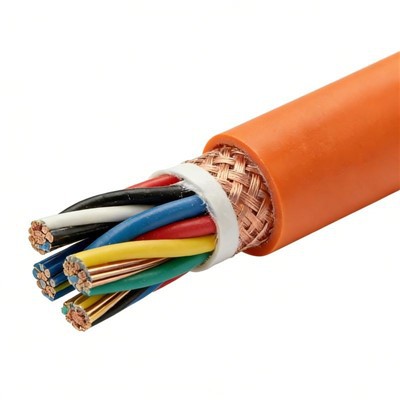
First, let’s start with the basics: elevator cables aren’t just a single solid steel rope. If you looked at one under a magnifying glass, you’d see they’re built in layers, like a very strong, very carefully woven bracelet. The innermost core is a flexible synthetic fiber, usually polypropylene or nylon. I know what you’re thinking—plastic in a part that holds thousands of pounds? That’s not random. The core does two key things: it gives the cable its bendability, which is non-negotiable because elevator cables wrap around a big pulley at the top of the shaft hundreds of times over their lifespan. If they were solid steel, they’d snap from metal fatigue in a matter of months, not years. The core also acts as a cushion between the individual steel wires, preventing them from rubbing against each other too harshly when they bend, which cuts down on wear and tear.
Wrapped around that core are multiple steel strands. Each strand is made of smaller steel wires twisted together, usually between 7 and 20 per strand, depending on the cable’s load capacity. The twisting pattern is critical here—twisting the wires in one direction and the strands in the opposite direction creates tension balance, so the cable doesn’t twist or kink when it moves. Think of how a jump rope works: if you twist one direction too many, it gets tangled, and elevator cables face that same constant twisting force every time the elevator moves up or down. We test every cable we supply to make sure that twist is perfectly calibrated, because even a tiny imbalance can lead to premature wear and a shorter lifespan.
Now, the steel itself isn’t regular construction steel. It’s high-carbon steel, heat-treated to be strong but still flexible. Carbon content makes up about 0.4 to 0.8 percent of the steel, which is enough to boost tensile strength to over 250,000 pounds per square inch—stronger than most car parts, even. After the steel is drawn into thin wires, it goes through a galvanization process, where a thin layer of zinc is applied to prevent rust. Elevator shafts are often damp, especially in older buildings, so rust would eat through the wires from the inside out over time. The galvanization process we use at our facility adds a uniform zinc coating without making the cable brittle, which is a balance a lot of cheaper suppliers get wrong.
But how do these cables actually hold an elevator and its passengers? Let’s talk about load dynamics. A standard elevator car for a 10-story building weighs around 2,000 pounds empty, and can hold another 3,000 pounds of passengers and cargo. But the cables have to hold more than that—they also have to support the weight of the cable itself, which is why longer elevator shafts (like in skyscrapers) need thicker cables. That’s why most elevators use at least four separate cables, sometimes six or eight, depending on the building’s height. This redundancy is non-negotiable for safety. Even if one cable suffers damage from wear, the others can hold the full load long enough for the elevator to be brought to a safe stop. For skyscrapers with 50 or more floors, we supply custom-engineered cables that are thicker, with more strands, to offset the added weight of the longer cable run.
I get a lot of questions from customers asking, “Do elevator cables ever break?” The honest answer is that modern elevator cables almost never break unexpectedly, but they do wear out over time, which is why regular inspection is required by code. The main cause of wear isn’t the load—it’s friction. When the cable wraps around the top pulley, the wires rub against each other, and the outer surface of the cable rubs against the pulley’s groove. Over time, this friction causes the steel wires to thin, or “strand loss,” and tiny cracks to form. We supply cables with a special lubricant embedded between the wires during manufacturing, which reduces that friction and extends the cable’s lifespan by 30 to 40 percent compared to unlubricated cables. Cheap suppliers skip the lubrication to cut costs, but that leads to cables needing replacement after just 5 years, instead of 15 or 20. That’s a short-term saving that ends up costing building owners way more in long-term maintenance.
Another key part of how elevator cables work is their connection to the elevator system. The cables don’t just hang straight down from the top pulley to the elevator car—they also loop around another pulley at the bottom of the shaft, called a counterweight pulley. That counterweight is about the same weight as the elevator car when it’s half full of passengers. This design isn’t just for balance: it cuts the load on the cables in half. If you think about it, lifting a 2,000-pound car is easier when you have a 2,500-pound counterweight pulling the other way—so the motor only has to move 500 pounds of extra weight, instead of 2,000. That’s why elevator motors can be so compact, and why the cables don’t have to be as thick as they would be without the counterweight. We work closely with elevator engineers to make sure the cable size matches the counterweight and load requirements of each specific building, because mismatched cables put unnecessary stress on the entire system.
I’ve been in this business long enough to have seen my share of mistakes. A few years back, I worked with a small maintenance company that had bought cheap cables from a supplier who cut corners on the heat-treating process. Within three years, the cables had developed hidden micro-cracks from metal fatigue, and the elevator started jerking when it moved. We replaced those cables with our standard heavy-duty ones, and within a year, that maintenance company came back to work with us on all their clients. That story stuck with me because it’s a perfect example of why the science behind elevator cables matters more than anything. It’s not just about how many wires you cram into a rope—it’s about the quality of the steel, the twist pattern, the lubrication, and the calibration for your specific building’s needs.
Modern technology has changed elevator cables a lot in the last decade. We now supply “low-elongation” cables, which mean they stretch less under load. Traditional steel cables stretch about 1 percent under full load, which might not sound like much, but for a 10-story elevator, that can add up to a few inches of movement when the elevator starts or stops. Low-elongation cables reduce that stretch to less than 0.2 percent, making the ride smoother and putting less stress on the motor and other parts of the elevator system. We also have cables designed for high-speed elevators (those going 1,000 feet per minute or faster) that have a special outer coating to reduce noise and vibration. Building managers in busy downtown areas love these because they cut down on noise complaints from tenants.
Safety is the non-negotiable core of everything we do as a cable supplier. Every cable we make goes through a series of tests before it leaves our warehouse: tensile strength tests to make sure it can handle twice its rated load, bend tests to simulate thousands of trips around pulleys, and rust resistance tests to mimic years of exposure to damp conditions. We also follow all industry standards set by organizations like the American Society of Mechanical Engineers (ASME) and the Occupational Safety and Health Administration (OSHA), because there’s no room for error when it comes to people’s safety.
I talk to a lot of building managers who think all elevator cables are the same, and they just pick the cheapest option. But what they don’t realize is that a 10 percent difference in upfront cost can lead to double the maintenance costs, and a higher risk of breakdowns. An elevator being out of service for a day means lost revenue for a retail building, or inconvenience for a hospital, where every minute counts. That’s why we don’t just sell cables—we offer consulting, too. We’ll come to your building, measure the shaft height, the elevator car weight, the number of floors, and the speed of the elevator, then help you choose the right cable that balances safety, lifespan, and cost. We also offer inspection services, because even the best cables need regular checks to make sure they’re wearing evenly.
If you’re a building manager, elevator installer, or maintenance supervisor who’s looking for reliable elevator cables that are built with science, not just shortcuts, I’d love to chat. We can walk through your specific needs, go over our testing processes, and make sure you get a cable that will keep your elevators running smoothly for years to come. Whether you’re working on a small 5-story office building or a large skyscraper, we have the expertise to supply the right product at a fair price.
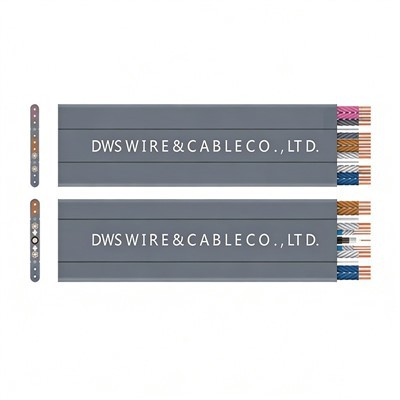
It’s easy to take elevator cables for granted, but when you understand how they work—the layers of steel, the calibrated twist, the counterweight balance, the years of testing—you start to see just how much engineering goes into something we barely notice. As a supplier, my job isn’t just to deliver a rope to your door. It’s to make sure that rope is holding up thousands of people every day, safely and reliably. If you’re ready to talk about your elevator cable needs, reach out to our team to start the conversation. We’re here to help.
Elevator Traveling Cable References
Elevator Technology Handbook, American Society of Mechanical Engineers
Wire Rope Design and Application, National Association of Elevator Contractors
Corrosion Resistance of High-Carbon Steel Wires for Elevator Cables, Journal of Materials Engineering and Performance
Cixi Davos Wire & Cable Co., Ltd.
As one of the most professional elevator cable manufacturers and suppliers in China, we also support customized service. Please feel free to buy bulk high quality elevator cable in stock here from our factory. For price consultation, contact us.
Address: No.3, Lane 91, Ruan Ding Road, Linxi Village, Xiaolin Town, Cixi City
E-mail: roy798@163.com
WebSite: https://www.cj-supplychain.com/
