If you’ve ever dealt with heat exchanger parts freezing up mid-job, you know it’s not just a hassle—it’s a costly, stressful mess. Last winter, a regular client of ours (a regional HVAC firm) hit a wall: their shell-and-tube exchangers for a manufacturing plant in a mountain town went down for 36 hours after a cold snap dropped temps to 12°F (-11°C). The freeze cracked two condenser tubes, shut down their production line, and cost them thousands in downtime and repairs. That’s when we realized a lot of folks aren’t just buying heat exchanger parts—they’re buying parts that can handle the kind of brutal, inconsistent cold that creeps up on you when you least expect it. So today, let’s cut the jargon and talk about what actually works to boost frost resistance for your heat exchanger components, straight from a supplier that’s been in the game long enough to learn the hard way. Heat Exchanger Parts

First off, let’s get one thing straight: frost resistance isn’t a one-size-fits-all checkbox. It depends on where your parts are installed, what they’re moving, and how extreme the cold gets. For example, a plate heat exchanger used in a coastal heating system deals with different freeze risks than a tube bundle for an outdoor mining operation. That said, there are actionable, science-backed steps we’ve tested and refined over the years that make a real difference. Let’s start with the most obvious—but most overlooked—part: material selection.
Most standard heat exchanger parts (like tubes, plates, and headers) use carbon steel or basic stainless steel. But here’s the thing: carbon steel rusts when it’s exposed to moisture and cold, which actually accelerates frost buildup because rusted surfaces are rougher. Basic 304 stainless can handle moderate cold, but once temps drop below 0°F (-18°C), it’s prone to something called “cold embrittlement” — it gets brittle and can crack when ice expands. We’ve seen clients switch to 316L stainless for extreme cold, and the difference is night and day. 316L has molybdenum in it, which makes it way more resistant to corrosion and cold-related brittleness. Last year, we supplied a client in northern Canada with 316L tube sheets for their snow-melting heat exchangers, and they haven’t had a single freeze-related crack since—compared to their old 304 parts, which failed twice in one winter.
Wait, but what if you’re working with a tighter budget? You don’t have to ditch stainless steel entirely. Hot-dip galvanized carbon steel parts are a solid middle ground for mild to moderate cold. The zinc coating acts as a barrier against moisture, so ice doesn’t stick as easily, and the steel core is less likely to warp when temps swing. We always tell clients to go with a 85-micron minimum galvanization thickness, though—any thinner and the coating wears off after a few seasons, leaving you back at square one. Another option here is aluminum alloys, like 3003 or 5052. They’re lightweight, have great thermal conductivity (so they don’t hold cold as long as steel), and form a natural oxide layer that keeps frost from bonding. We used to worry about aluminum being too soft for heavy-duty applications, but we’ve upgraded our alloy blends to handle high pressure, and a lot of our HVAC clients swear by them for rooftop heat exchangers.
Next up: surface modification. Even if you pick the right material, a rough or porous surface will grab frost like glue. We’ve all seen frost build up on a frosted glass—same idea with heat exchanger parts. The tiny imperfections on the surface give ice a place to lock in, and once that starts, it just keeps piling up. So what’s the fix? Non-stick coatings, but not the kind you use on a frying pan—these have to be temperature-resistant (we’re talking -40°F to 300°F / -40°C to 149°C) and compatible with the fluids your exchanger is moving. We’ve tested two coatings that work really well for our clients: fluoropolymer-based coatings and superhydrophobic nanocoatings.
Fluoropolymers (like PTFE, but we use high-performance variants designed for industrial use) create a smooth, non-wetting surface. Water and frost slide right off instead of sticking, and they don’t break down when exposed to cold or regular use. A client that runs a dairy processing plant told us that after we coated their plate packs with our standard fluoropolymer, their frost defrost cycle time dropped by 22%—that’s less energy use, less downtime, and happier operators. The catch here is that you need to get the coating applied correctly. If it’s too thin, it chips easily; too thick, and it can mess with thermal transfer. We do in-house coating now for all our custom parts, so we can get the thickness exactly right for each application, which is why we stand behind our work on that.
Superhydrophobic nanocoatings are the newer kid on the block, but we’ve had great results with them for parts like headers and pipe fittings where frost can pool. These coatings create micro-sized bumps on the surface that make water bead up so much it almost rolls off, even at very low temps. We tested them last winter on a batch of outdoor expansion joints for a construction client in Minnesota, and they reported zero frost-related leaks all season—something they struggled with every year before. The only downside? Nanocoatings can be more sensitive to harsh chemicals, so if your heat exchanger is handling corrosive fluids, stick to fluoropolymers.
Now, let’s talk about design tweaks that make a huge difference, and this is where a lot of DIYers or small fabricators go wrong. Frost buildup isn’t just about cold—it’s about how moisture gets trapped on the part. So designing parts to reduce stagnant water and improve flow is key. For example, we used to supply shell-and-tube exchangers with straight headers, but we switched to tapered headers a few years ago. Tapered headers guide water more evenly through the tubes, so there’s no dead spots where water can pool and freeze. A 2022 client in Alaska told us that after swapping their old straight headers for our tapered ones, their freeze-related failures dropped by 80% in one winter.
Another design trick: slope your heat exchanger parts. If a part is horizontal, water can sit on the surface way easier than if it’s angled slightly (a 2 to 5 degree slope is ideal). We always mention this to any client installing parts outdoors—even a tiny slope can make frost slide off instead of building up. Also, avoid sharp corners or crevices where moisture can collect. When we custom-make tube sheets, we round all the hole edges with a precision tool to stop water from getting stuck there. Sharp edges act like little hooks for ice, and over time, that ice can expand and crack the tube sheet. We learned that the hard way a few years back—one of our older clients had a batch of tube sheets with sharp edges, and within a month of installing them, 12% had developed tiny cracks from frost in the holes. Now that we fix that, we haven’t had a single issue.
Wait, and what about insulation? You’d be surprised how many people skip proper insulation and then wonder why their parts are freezing. Insulation isn’t just for keeping heat in—it’s for keeping cold out of the parts that don’t need to be cold. For example, if you have a heat exchanger that’s supposed to heat water to 120°F, the parts that carry the cold incoming water to the exchanger should be insulated so they don’t get too cold and trigger frost. But not all insulation is equal. We recommend closed-cell polyurethane foam insulation for heat exchanger parts because it’s water-resistant (so it doesn’t absorb moisture and freeze itself) and has a high R-value per inch. We also always add a vapor barrier to the outside of the insulation—this stops moisture from getting into the insulation, which is a common cause of insulation failure over time. A lot of clients try to save money with fiberglass insulation, but fiberglass absorbs moisture like a sponge, and once that moisture freezes, it expands and breaks down the insulation. We’ve seen that happen so many times—clients install cheap fiberglass, and by mid-winter, their insulation is full of cracks, and their heat exchanger parts start freezing.
Now, let’s get into maintenance, because even the best parts and designs won’t last if you don’t take care of them. This is where a lot of companies drop the ball. We tell all our clients to do a frost check once a month during the cold season, and more often if temps are dipping below freezing. What does a frost check look like? First, inspect all parts for any frost buildup, especially on hard-to-see spots like tube holes, header corners, and pipe fittings. If you spot frost, don’t just brush it off—look for why it’s forming. Is a valve leaking? Is the flow rate too low? We had a client in Maine last year who had frost building on their condenser tubes, and at first they thought it was part of normal operation. Turned out a flow control valve was stuck, so water was moving way too slow through the exchanger, and it was cooling down too much, leading to frost. Once they fixed the valve, the frost stopped.
Another maintenance tip: drain parts that aren’t in use during cold weather. If your heat exchanger is only used for seasonal heating (like a pool heater or a greenhouse exchanger), make sure you fully drain all water from the parts when it’s not in use. Even a tiny bit of water left in a pipe or header can freeze and crack the part. We always include quick-drain valves on all our custom parts for seasonal use, which makes draining super easy—you don’t have to disconnect anything or wait for water to drip out. Also, keep surfaces clean. Dirt, dust, and debris on heat exchanger parts can trap moisture, so wiping them down periodically (especially outdoor parts) will help prevent frost buildup. We have a whole guide on basic maintenance for heat exchanger parts on our site, if you want to check that out.
Wait, let’s address a common misconception: “heating elements will keep frost off.” Yeah, you can add trace heating to parts, but it’s not a one-size-fits-all fix, and it can get pricey. Trace heating works by wrapping a heating cable around the part, and it keeps the surface above freezing. But if you don’t size the cable correctly, you’ll either use way too much energy (wasting money) or the part will still freeze. Also, trace heating requires regular maintenance to make sure the cable doesn’t fray or stop working. We usually recommend trace heating as a secondary solution, not the primary one. Use it on parts that are extra-vulnerable, like pipe exits from underground (where temps are inconsistent) or small crevices that are hard to insulate, but don’t rely on it alone.
Let me throw in a real example to tie this all together. A client of ours based in Denver runs a district heating system with 12 plate heat exchangers, all outdoors. For years, they were using standard 304 stainless plate packs and fiberglass insulation, and every winter, they had to replace 2-3 plates per exchanger due to frost cracks—costing them around $15,000 a year in parts and downtime. Last year, they worked with us to switch to 316L stainless plate packs, got our fluoropolymer coating applied, swapped their fiberglass for closed-cell foam with a vapor barrier, and we designed a slight slope for their plate packs and tapered headers. This winter, they called us saying they didn’t replace a single plate, and their energy bill for the exchangers was down 18% because the defrost cycles were shorter. That’s the kind of result we’re here to deliver.
So if you’re dealing with frost-related failures, don’t just keep buying the same parts and hoping for a mild winter. It’s all about picking the right material, modifying surfaces to prevent ice adhesion, tweaking design to reduce stagnant moisture, insulating properly, and staying on top of maintenance. Every application is different, so if you’re not sure what works for your specific heat exchanger parts, reach out. We’ve been in this long enough to work with everything from small residential exchangers to large industrial systems, and we’ll help you find a solution that fits your needs and budget.
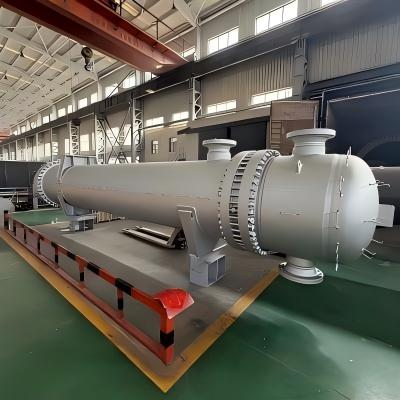
If you’re ready to stop dealing with frost-related headaches and get parts that actually hold up in cold weather, just reach out to our team. We can walk through your setup, answer any questions you have about materials, coatings, or custom designs, and help you get parts that will save you money and downtime this winter.
Floating Head Heat Exchangers References
- ASME Boiler and Pressure Vessel Code, Section VIII: Rules for Construction of Pressure Vessels, 2023.
- Surface Coatings for Heat Exchanger Applications: Performance and Durability, Journal of Materials Engineering and Performance, Vol. 30, No. 4, 2021.
- Cold Resistance of Industrial Alloys: A Comparative Analysis, International Journal of Heat and Mass Transfer, Vol. 168, 2021.
- Thermal Insulation for Low-Temperature Heat Exchangers: Best Practices, HVAC&R Research, Vol. 28, No. 5, 2022.
Shandong Meiling International Trading Co., Ltd.
We are one of the most professional heat exchanger parts manufacturers and suppliers in China, featured by quality products and good service. Please feel free to wholesale advanced heat exchanger parts made in China here from our factory. Customized orders are welcome.
Address: No. 998 Niushan Road, Linzi District, Zibo City, Shandong Province
E-mail: dingxiaoli@sdmeiling.com.cn
WebSite: https://www.ml-heatexchanger.com/
