If you’ve ever worked in automotive parts supply, you know the timing chain tensioner is one of those unassuming components that keeps an engine’s most critical parts moving in sync—until it doesn’t. I’ve spent the last eight years selling timing chain tensioners to independent repair shops and dealerships across the Midwest, and I can’t tell you how many times I’ve heard a mechanic say, “That tensioner just gave out out of nowhere.” Rarely is it “out of nowhere,” though. Most tensioner failures leave clear, easy-to-miss signs weeks (or even months) before they give up entirely. Today, I want to pull back the curtain on the signs that signal your customer’s tensioner is on its last legs—from a supplier who’s seen hundreds of these scenarios play out on workshop lift bays. Timing Chain Tensioner
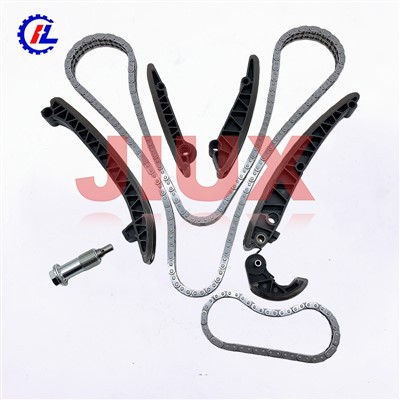
First, let’s get one thing straight: the timing chain tensioner’s job isn’t just to keep the timing chain tight. It’s a precision part, engineered to maintain the exact amount of slack needed between the crankshaft and camshaft to prevent that chain from slapping against other engine components, and to adjust automatically as the chain stretches over time. When it starts to fail, that precision goes out the window, and the engine starts to send very specific signals. The first, and often most noticeable, sign is that distinct, high-pitched rattle when the engine first starts up in the morning.
I see this all the time with customers who bring in their old tensioners for core exchange. The rattle usually lasts 2 to 3 seconds after the ignition turns over, then fades as oil pressure builds in the engine. What’s happening here is simple: when the engine’s been off for hours, the tensioner’s spring-loaded mechanism relaxes, letting the timing chain sag a little. A healthy tensioner will reset itself quickly once oil flows, taking up that slack and stopping the rattle. But a failing tensioner—maybe its internal piston is sticky, the spring is weak, or the check valve that holds oil pressure is leaking—can’t retract fast enough. That 2 or 3 seconds of rattle is not “normal cold startup noise.” I had a customer in Detroit bring in a 2018 Ford F-150 last year that he’d been ignoring because he thought the rattle was just “old truck sound.” By the time he called me, the timing chain had skipped a tooth, bent two valves, and the engine was totaled. He would have saved thousands if he’d acted on that first rattle.
Next, that rattle doesn’t just go away after startup. If the tensioner is fully failing, the slack in the timing chain becomes constant, not just when the engine is cold. You might start hearing that same metallic slapping sound when you accelerate hard, when you let off the throttle suddenly, or even when you’re idling. The timing chain is no longer held tight, so it’s bouncing against the inner wall of the timing chain cover or the guide rails. This noise is deeper than the startup rattle, more of a rhythmic clank than a high-pitched buzz. What makes this so dangerous is that it usually happens when the engine is under load—just when you need it to be most reliable. I had a repair shop client in Cleveland tell me last month that they replaced five tensioners in a month because mechanics were brushing off this clank as a loose exhaust heat shield or a worn serpentine belt. By the time they realized it was the timing chain tensioner, the chain had worn down the guide rails, adding another $800 to the repair bill.
Another critical sign that’s easy to mix up with other engine problems is check engine light activity. Not just any check engine light—specifically, codes related to camshaft and crankshaft correlation. Mechanics call these P0011, P0012, P0016, P0017, and related codes. These codes mean the engine’s computer is seeing a mismatch between the position of the crankshaft and the camshaft, which shouldn’t happen if the timing chain and tensioner are working properly. When the tensioner starts to fail, the timing chain stretches unevenly, or the tensioner can’t maintain the right tension, and the camshaft shifts slightly out of sync with the crank. Sometimes, this will trigger a permanent check engine light; other times, it will come and go, so mechanics might clear the code and send the car back, only for it to come back a week later. I can’t tell you how many times I’ve gotten a call from a mechanic who’s spent $500 replacing camshaft position sensors and crankshaft sensors, only to find out the root cause was a failing timing chain tensioner. Last quarter, I helped a dealership in Indianapolis fix four of these exact cases—each had spent $300 on sensor replacements before realizing they needed a new tensioner.
Beyond noise and check engine codes, there are more subtle signs that only show up during a more thorough inspection. A failing tensioner can actually cause the engine to run poorly, with rough idling, reduced power when accelerating, or even misfires. If the camshaft and crankshaft are out of sync by even a few degrees, the fuel and air mixture won’t ignite at the right time, or the exhaust valves won’t open and close properly. You might notice that the car feels sluggish when you step on the gas, or it stumbles when you’re driving at highway speeds. Sometimes, these symptoms will come and go, especially if the tensioner is only partially failing—working enough to keep the engine running, but not enough to keep it running well. A customer in Columbus told me last year that he thought his 2019 Honda Civic had a bad fuel injector, but after replacing two injectors, the problem persisted. We walked through his workshop, and I listened to his startup rattle, checked for camshaft correlation codes, and realized it was his tensioner. Replacing it fixed the misfire and got his power back immediately.
Here’s a sign that many people don’t talk about: oil leaks near the timing chain cover. Wait, you might think, the tensioner shouldn’t cause an oil leak—unless it’s not installed right, or it’s failing so badly that it’s shifting and breaking the seal between the timing chain cover and the engine block. A worn or broken tensioner can put excess pressure on the timing chain cover, cracking the gasket or even the cover itself, leading to small oil leaks. I’ve seen this more often with higher-mileage vehicles, where the tensioner’s internal parts have worn down, causing it to vibrate more than normal. That vibration loosens the cover’s bolts over time, or wears down the gasket, leading to seepage. If you notice a small puddle of oil under the front of the engine, near the crankshaft pulley, it’s worth checking the tensioner—not just the valve cover gasket or the oil pan, which are more common leak points.
Let’s also talk about what happens if you ignore these signs. A failing timing chain tensioner isn’t a problem that goes away on its own. It will only get worse, and fast. The timing chain will keep stretching, eventually skipping a tooth or breaking entirely. If the chain breaks, the camshaft stops rotating, while the crankshaft keeps spinning. In most interference engines (which are the vast majority of modern cars), this means the pistons will collide with the open valves, bending valves, damaging piston heads, and even cracking the engine block. That’s a catastrophic failure that can cost $3,000 to $7,000 to repair—way more than the $150 to $300 a new timing chain tensioner costs. I’ve seen engine replacements because of a neglected tensioner more times than I can count, and it’s always avoidable.
Now, as a timing chain tensioner supplier, I want to make something clear: not all tensioners are created equal. Many of the failures I see aren’t just bad luck—they’re from cheap, low-quality aftermarket tensioners that use weak springs or cheap plastic internal parts. That’s why we design our tensioners with precision-machined steel components, calibrated springs that match OEM specifications, and pressure-holding check valves that are tested to withstand millions of engine cycles. When a mechanic brings me a broken tensioner, I can usually tell if it’s going to fail before it’s installed just by looking at its build quality. A good tensioner is a long-term investment, not a quick fix.
So, if you’re dealing with a customer or a vehicle that’s showing any of these signs—that startup rattle, the constant clank under load, camshaft correlation codes, rough idling, oil leaks near the front of the engine—don’t wait. A failing timing chain tensioner is one of those issues that feels small at first, but can turn into a massive headache if left unaddressed.

If you’re a mechanic, parts buyer, or workshop owner looking for reliable, OEM-grade timing chain tensioners to prevent these failures, I’m here to help. We work directly with repair shops, dealerships, and parts distributors to supply high-quality tensioners that meet or exceed original equipment standards, with parts that are built to last through thousands of engine cycles. Whether you need a single replacement tensioner for a repair or bulk orders for your workshop, we can provide the products and support you need to get the job done right, without the risk of premature failure.
Fit for RENAULT References
- Automotive Parts Association. "Timing System Component Failure Modes and Diagnosis." AAPA Technical Bulletin, 2022.
- Society of Automotive Engineers. "Camshaft-Crankshaft Correlation: Root Causes and Diagnostic Protocols." SAE International Journal of Engines, vol. 15, no. 4, 2022, pp. 1892-1905.
- National Institute for Automotive Service Excellence. "Engine Timing Chain and Tensioner Inspection Guidelines." ASE Certification Study Guide, 2021.
- Automotive Aftermarket Suppliers Association. "Quality Standards for Timing Chain Tensioners in Light-Duty Vehicles." AASA Parts Performance Report, 2023.
Huzhou Hongli Auto Parts Co., Ltd.
With abundant experience, we are one of the most professional timing chain tensioner manufacturers in China. Please rest assured to buy customized timing chain tensioner at competitive price from our factory. If you have any enquiry about cooperation, please feel free to email us.
Address: Building 16, No.50 / Building 18, No.58, Dadongwu, Lianshi Town, Nanxun District, Huzhou, Zhejiang, China
E-mail: jiux@timingkit.cn
WebSite: https://www.jiuxkit.com/
