If you’ve ever stood beside a busy highway or a warehouse loading dock and watched a tractor truck back into a tight spot, you’ve probably wondered how these massive vehicles manage to turn without scraping barriers or misjudging space. As a supplier of tractor trucks, I field this question every week—from new fleet operators trying to plan their depot layouts to experienced drivers shopping for models that work on narrow city streets. The answer isn’t just a number; it’s a balance of physics, vehicle design, and how we build our trucks to meet real-world needs. Tractor Truck

First, let’s get clear on a key term: turning radius. Simply put, it’s the smallest circle a vehicle can make while turning at low speed (no drifting or high-speed maneuvers, which don’t reflect how most tractor trucks operate) with the steering turned all the way. For a passenger car, that number is usually between 18 and 20 feet, so it’s easy to park in a standard spot. For a tractor truck, it’s far larger—but that’s not the whole story. Tractor trucks don’t turn like cars. Their front wheels pivot, but the coupling between the tractor and the trailer means there’s also an articulation point that affects how the whole rig moves. That’s why when people ask for the turning radius, they’re often referring to two different measurements: the curb-to-curb turning radius (the smallest circle the outer front tire makes) and the off-tracking (how much the rear wheels of the trailer cut inside the front wheels’ path when turning). I’ll break both down, because choosing the right number depends entirely on where you’re using your trucks.
Let’s start with the basics of how a tractor truck is built. A standard class 8 tractor (the heavy-duty model most people recognize) has a wheelbase—the distance between the front axle and the rear axle of the tractor—of around 14 feet. Add a 53-foot standard dry van trailer, and the total wheelbase of the entire rig jumps to 67 feet. That long wheelbase is the biggest factor in the large turning radius. For a standard day cab tractor paired with a 53-foot trailer, the curb-to-curb turning radius is roughly 55 to 60 feet. Wait, that sounds big—and it is. That means to turn a full rig around in a 90-degree corner, you need a space at least 100 feet deep and 20 feet wide to avoid hitting curbs, buildings, or other vehicles. But here’s the part most people don’t mention: a single tractor alone (without a trailer) has a much smaller turning radius, around 20 to 25 feet. That’s why when you see a tractor backing up to a loading dock, they usually disconnect the trailer first—maneuvering the empty tractor is way easier than the full rig.
But not all tractor trucks are the same, right? As a supplier, I know that turning radius changes based on how the truck is configured, and that’s a huge part of what matters to customers. For example, if you’re using a day cab tractor for local deliveries, you might go with a shorter wheelbase tractor—12 feet instead of 14. Pair that with a 28-foot delivery van instead of a 53-foot trailer, and the turning radius drops to around 45 to 50 feet. That’s a big difference for urban routes where streets are narrow, like in Manhattan or downtown Chicago. On the other end, if you’re running long-haul cross-country routes, you might opt for a sleeper cab tractor with a longer wheelbase (15 feet) to improve fuel efficiency and stability at highway speeds. That longer wheelbase makes the turning radius a bit larger, around 60 to 65 feet, but it’s a trade-off for better performance on the open road.
Another key component here is the steering system. Modern tractor trucks have come a long way from the heavy, hard-to-turn rigs of 20 years ago. Power steering systems are standard now, and many of our newer models have an articulation point that lets the tractor and trailer pivot at a sharper angle, reducing the overall turning radius. Some of our specialized models, like the yard tractor (used to move trailers around a depot instead of driving on highways), have even tighter turning radii—around 30 feet. That’s because they spend all their time in tight, confined spaces, so we design their steering to allow a much sharper turn. We also have customers who use tractor trucks for construction sites, where they might be moving dump trailers or flatbeds. For those, we offer adjustable wheelbase options and optimized steering to cut the turning radius down to 50 feet, even with a heavy 40-foot flatbed.
Now, let’s talk about off-tracking, because that’s where a lot of accidents happen, especially for new drivers. Off-tracking is the difference between the path of the front wheels of the tractor and the path of the rear wheels of the trailer when turning. Think of it like this: if you’re driving a car, all four wheels follow roughly the same path when turning. But a tractor and trailer are two separate units, so when the front wheels turn left, the tractor’s rear wheels follow a slightly tighter line, and the trailer’s rear wheels follow an even tighter line. How much tighter? For a 53-foot rig, off-tracking can be up to 10 feet. That means when a tractor turns into a 10-foot-wide lane, the back of the trailer will cut 10 feet inside, so if there’s a parked car or a fire hydrant on the inside of the turn, it’s going to get hit. That’s why knowing the turning radius isn’t enough—you also have to account for off-tracking when planning routes, loading docks, and depot layouts.
I’ve seen this firsthand with a customer of mine last year. They were a local delivery company in a mid-sized city, and they bought three standard 53-foot rigs without checking the turning radius or off-tracking. Their main route had a few narrow side streets with tight corners, and within a month, they’d scraped two trailer sides and hit a street sign. The problem wasn’t the size of the trucks—it was that they didn’t adjust their route or their fleet configuration. We helped them swap two of the 53-foot trailers for 28-foot delivery vans, which cut the turning radius by 10 feet and reduced off-tracking to just 5 feet. The damage claims dropped to zero, and their drivers reported way less stress on those tight streets. That’s the kind of practical, on-the-ground knowledge we bring to the table as a supplier—it’s not just selling a truck, it’s helping a customer figure out what turning radius works for their specific needs.
A lot of new fleet operators make the mistake of thinking “smaller turning radius = better truck,” but that’s not always true. A shorter wheelbase tractor might turn tighter, but it’s less stable at highway speeds, which is a big safety risk for long-haul routes. A longer wheelbase has a larger turning radius, but it saves fuel and is more comfortable for drivers spending 10 hours a day on the road. It’s all about trade-offs, and as a supplier, we work with every customer to find the sweet spot. For example, if you’re a cross-country carrier, stability and fuel efficiency are more important than squeezing into a tight corner once in a while. If you’re a local delivery company, fitting into a residential neighborhood or a small loading dock is non-negotiable. That’s why we offer a range of models: day cabs, sleeper cabs, yard tractors, regional haul tractors, each with different turning radii to match different use cases.
We also run tests in our own depot to measure turning radius, because every configuration is a little different. We use a tape measure and chalk to mark the path of the front outer wheel and the rear outer wheel when turning at full steering, with different trailer lengths, loads, and even tire pressures. (Yep, tire pressure affects turning radius too—underinflated tires can cause the wheel to scrub, which makes the turning radius larger.) Those tests give us the exact numbers we can share with customers, so they don’t have to guess. For a fully loaded 53-foot long-haul rig, our tests put the curb-to-curb turning radius at 58 feet, and the off-tracking at 8.5 feet. For an empty 28-foot local delivery rig, that drops to 47 feet and 3 feet of off-tracking. Those are the real-world numbers, not the generic ones you’ll find in a spec sheet.
I get asked another question a lot: can you make a tractor truck with a smaller turning radius? The short answer is, not without changing how the truck works. To cut the turning radius, you’d need a shorter wheelbase, but that would make the truck less stable, especially when loaded. Or you could add more steering axles—some heavy-duty tractors have two steering axles in the front, which lets the wheels turn at a sharper angle. That does reduce the turning radius, but it adds cost and weight, which hurts fuel efficiency. For most use cases, the 55 to 60 foot turning radius of a standard rig is the sweet spot. It’s tight enough to work on most main roads, but stable enough for long hauls.
If you’re in the market for tractor trucks, here’s what I recommend. First, map out your routes and where you’ll be operating. If you’re driving on narrow urban streets or tight depot lanes, prioritize a turning radius under 50 feet. If you’re doing cross-country, prioritize stability and fuel efficiency, even if that means a slightly larger turning radius. Second, talk to a supplier who knows how turning radius works in the real world—not just the spec numbers. As someone who’s been selling tractor trucks for over 15 years, I can tell you that the best model for you isn’t the one with the smallest turning radius—it’s the one that fits your specific routes, your drivers, and your budget.
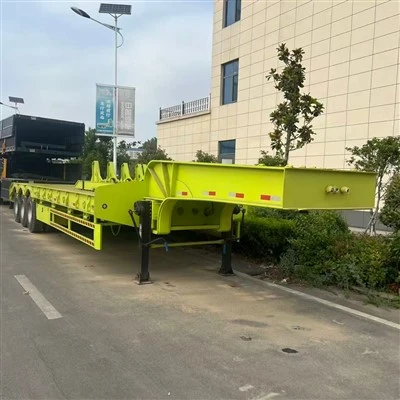
At the end of the day, the turning radius of a tractor truck is more than a technical spec—it’s a practical detail that affects your operations, your costs, and your drivers’ safety. I’ve seen customers make the wrong choice because they only looked at a number on a page, and I’ve seen them save thousands in damage and stress because they picked the right truck for their needs. If you’re planning to add tractor trucks to your fleet, or replace your current models, I’m here to walk you through the math, show you test data from our depot, and help you choose a configuration that works for your routes. No generic advice, no pushy sales pitches—just real knowledge from someone who’s been in the industry for years. Reach out to us to start a conversation about your fleet needs and find the right tractor truck with the perfect turning radius for your operations.
HOWO Tractor Truck References
SAE International. (2021). J2179: Road Vehicle Turning Dimensions and Paths. Society of Automotive Engineers.
American Trucking Associations. (2022). Heavy-Duty Vehicle Design Guidelines for Urban Freight Operations. ATA.
National Highway Traffic Safety Administration. (2020). Commercial Vehicle Turning Performance and Accident Risk. NHTSA.
Caterpillar Inc. (2021). Vocational Tractor Truck Design: Articulation and Maneuverability. Caterpillar Global Construction and Mining.
Jining Yaochi Automobile Trading Co., Ltd.
With abundant experience, we are one of the most professional tractor truck manufacturers in China. Please feel free to buy cheap tractor truck made in China here from our factory. Quality products and reasonable price are available.
Address: Liangshan Industrial Park, Jining City, Shandong Province, China
E-mail: Yzhiying23@gmail.com
WebSite: https://www.yaochitruck.com/
