Hey there! I’m a supplier of telescopic tracks, and I’ve been getting a lot of questions lately about whether these tracks can be used in medical devices. So, I thought I’d take a deep – dive into this topic and share my thoughts. Telescopic Track
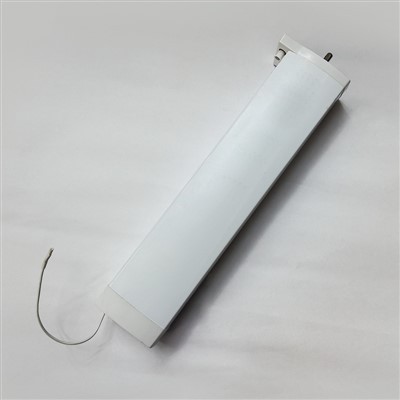
First off, let’s talk a bit about what telescopic tracks are. You know, telescopic tracks are those nifty mechanical components that can extend and retract in a linear fashion. They’re made up of multiple sections that slide within each other, which allows them to cover a longer distance when extended compared to their collapsed length. They’re commonly used in all sorts of stuff like furniture, industrial equipment, and even some automotive applications.
Now, when it comes to the medical field, the requirements are way different. Medical devices need to meet some seriously strict standards. We’re talking about things like biocompatibility, sterility, precision, and reliability. These devices are used in life – saving procedures and patient care, so there’s no room for error.
Let’s start with biocompatibility. In medical applications, any material or component that comes into contact with the human body has to be biocompatible. That means it shouldn’t cause any harmful reactions, like allergies or inflammation. Most of the telescopic tracks we supply are made from metals like stainless steel or aluminum. Stainless steel is a great choice because it’s corrosion – resistant and can be easily sterilized. Aluminum is also used sometimes because it’s lightweight. But we have to make sure that the surface finish and any coatings on these materials are biocompatible. We’ve done some tests on our tracks to ensure that they meet the basic biocompatibility requirements. For example, we’ve checked for things like cytotoxicity (whether the material kills cells), hemocompatibility (how it interacts with blood), and skin irritation. So far, the results have been pretty promising, but we’re always looking to improve and make sure we’re up to the highest standards.
Sterility is another huge deal in medical devices. Medical equipment has to be sterilized before it’s used on patients to prevent infections. Our telescopic tracks can be sterilized using common methods like autoclaving (using high – pressure steam), ethylene oxide gas sterilization, or gamma radiation. The materials we use can withstand these sterilization processes without losing their mechanical properties. For instance, stainless steel can handle the high temperatures in an autoclave, and the structure of our tracks remains intact after multiple sterilization cycles.
Precision is key in medical devices. Whether it’s a surgical robot that needs to make extremely accurate movements or a diagnostic machine that has to position sensors precisely, the telescopic tracks need to be able to move smoothly and stop exactly where they’re supposed to. Our tracks are designed with high – precision manufacturing techniques. We use advanced machining processes to ensure that the sliding surfaces are smooth and have a tight fit. This reduces any play or backlash, which means the movement of the track is consistent and accurate. We also offer tracks with different levels of precision, so depending on the specific requirements of the medical device, customers can choose the right one.
Reliability is non – negotiable in the medical field. A medical device can’t break down in the middle of a procedure. Our telescopic tracks are built to last. We test them rigorously under different conditions, like repeated extension and retraction cycles, different loads, and varying temperatures. We’ve found that our tracks can withstand thousands of cycles without significant wear or malfunction. This high level of reliability gives medical device manufacturers confidence in using our products.
There are also some specific applications where telescopic tracks could be really useful in medical devices. For example, in adjustable hospital beds. These beds need to be able to change their height, angle, and position easily. Telescopic tracks can provide a smooth and stable movement mechanism for adjusting the various parts of the bed. They can be used to raise or lower the headrest, footrest, and the entire bed frame. This not only improves the comfort of the patient but also makes it easier for healthcare providers to access and treat the patient.
Another application is in surgery. Surgical robots are becoming more and more popular, and they require precise movement mechanisms. Telescopic tracks can be used in the arms of these robots to provide linear motion. This allows the surgeon to control the position of the surgical instruments with high accuracy, which can lead to better surgical outcomes.
In diagnostic equipment, like MRI or CT scanners, telescopic tracks can be used to position the patient table or the scanning device. This ensures that the patient is in the correct position for accurate imaging, which is crucial for diagnosing diseases and conditions.
Of course, there are some challenges too. One of the main challenges is the cost. Developing and manufacturing telescopic tracks that meet medical standards can be expensive. The high – quality materials, precision manufacturing processes, and strict quality control all add to the cost. But we’re constantly working on ways to optimize our production processes to make our products more cost – effective without compromising on quality.
Another challenge is the regulatory environment. The medical device industry is highly regulated, and we need to make sure that our telescopic tracks comply with all the relevant regulations. This includes things like getting the necessary certifications from regulatory bodies. It’s a complex process, but we have a team that’s dedicated to ensuring that we meet all the requirements.
So, to answer the question, yes, a telescopic track can definitely be used in a medical device. We’ve seen the potential, and we’re excited about the possibilities. Our telescopic tracks have the biocompatibility, sterility, precision, and reliability that medical devices need. We’ve also been doing a lot of research and development to improve our products and make them even more suitable for medical applications.

If you’re a medical device manufacturer and you’re interested in using our telescopic tracks in your products, I’d love to have a chat with you. We can discuss your specific requirements, and I can show you how our tracks can fit into your design. Whether you need a custom – made track or a standard one, we’ve got the expertise to help you out. Don’t hesitate to reach out and let’s start talking about how we can work together.
Curtain Motor References:
- ASTM standards related to biocompatibility testing
- ISO standards for medical device manufacturing
- Research papers on the use of mechanical components in medical devices
Guangdong Langsen M.&E. Co., Ltd.
As one of the most professional telescopic track manufacturers and suppliers in China, we’re featured by quality products and good service. Please rest assured to wholesale customized telescopic track made in China here from our factory. Contact us for more details.
Address: No. 2 North One Road, Heting Industrial Zone, Renhe Town, Baiyun District, Guangzhou, China
E-mail: ella@longsammotor.com
WebSite: https://www.langsenmotor.com/
