If you’ve ever pulled on a pair of joggers that sag mid-walk, a sports waistband that rolls up during a run, or a scrub top band that snaps open at the worst possible moment, you already know the frustration of poor elastic waist band quality. As a supplier that’s worked with brands, manufacturers, and small retail teams across North America for over a decade, I’ve lost count of how many times a customer has come to us with a batch of elastic bands that failed long before their finished product made it to store shelves. The question I get asked most often, though, isn’t “how do I fix this?” It’s simply: what is the actual industry standard for elastic waist band quality? Elastic Waist Band

There’s a lot of conflicting info out there—some blogs will tell you stretch is the only metric, while social media DIY creators swear by “10x stretch resistance” as the only number that matters. But after testing over 2,000 different elastic formulations with our in-house quality team, and auditing production facilities across three continents, I can tell you the industry standard isn’t a single number. It’s a combination of five interconnected metrics that balance performance, durability, cost, and compliance—because a band that’s too durable is a waste of money, and one that’s too cheap will tank your product’s reputation in six months.
Let’s start with stretch recovery, the most important metric for any waist band. This is how well the elastic returns to its original length after being stretched to its maximum intended use. For most applications—think casual joggers, loungewear, or uniform scrub tops—ASTM International’s standard for textile elastic components (ASTM D4964, for those in the know) requires a minimum stretch recovery of 90% when stretched to 200% of its original length. Wait, let’s break that down: if you have a 40cm piece of elastic, when you pull it to 80cm (200% stretch), when you let go it should snap back to at least 36cm (90% of 40cm). That rule covers 90% of the elastic waist bands we produce. But for high-stress applications, like athletic waist bands or swimwear, the standard jumps to 95% recovery at 250% stretch. I learned this the hard way in 2018, when we supplied a batch of 50,000 athletic waist bands to a startup that skipped the recovery test. They ended up with 12,000 returns because the bands stretched out after three uses, and the startup lost their only major retail partnership. Recovery isn’t just about comfort—it’s about keeping a pair of pants from sagging in the middle of a workday or a run.
Next, elongation at break. This is how far an elastic can stretch before it snaps, and it’s a make-or-break metric for edge cases. The industry standard here varies by use: 150% elongation for lightweight bands (like those used in kids’ underwear), 250% for medium-weight (loungewear), and 300% for heavy-duty (workwear or medical scrubs). I always tell customers not to chase higher numbers than they need—300% elongation in a 1-inch wide band is overkill for a pair of pajama pants, and it’ll add unnecessary cost to your production run. Last year, we had a small boutique brand come to us because their previous elastic would snap when customers pulled the pants on over thick winter layers. We swapped their 200% elongation band for a 250% one, and their return rate for broken waist bands dropped by 82% in three months. It’s about matching the elongation to your product’s intended use, not picking the highest number possible.
Durability, or how many times the elastic can stretch before recovery drops below 85%, is another non-negotiable part of the standard. The general industry benchmark here is 5,000 stretch cycles for light use, 10,000 for medium, and 15,000 for heavy-duty applications. We test this with a machine that repeats the stretch and release motion 24/7—you’d be shocked how many suppliers cut corners here, sending bands that fail at 1,200 cycles instead of 5,000. I’ve seen brands get caught off guard by this in the fast fashion space, where products are washed weekly for 10–15 wears before being discarded. If your target audience is college students who wear their hoodies to class and wash them twice a week, skimping on durability is a death sentence for your review scores.
Compliance is another core part of the industry standard, and it’s not just about following rules—it’s about protecting your brand. Depending on where you’re selling, you need to meet safety and environmental regulations that dictate everything from the materials in your elastic to the chemicals used in processing. For example, in the European Union, REACH (Registration, Evaluation, Authorization, and Restriction of Chemicals) bans over 2,000 harmful substances in textile elastic, including certain phthalates that can be used to make elastic softer. In the U.S., the Consumer Product Safety Commission (CPSC) has strict standards for kids’ clothing, requiring elastic bands for children under 12 months to have a tensile strength of at least 10 pounds to prevent choking hazards. I can’t tell you how many times we’ve had a customer ship a batch of product to a retailer only to get it sent back because their elastic didn’t meet REACH limits—costing them thousands in shipping and lost shelf space. Compliance isn’t a “nice to have”; it’s a baseline industry standard that separates reliable suppliers from ones that cut corners.
Finally, there’s the functional performance test that most people don’t talk about, but that’s the final check: dimensional stability after washing. For all your lab tests to matter, the elastic needs to hold its shape through repeated washes and dryings. The industry standard here is that a waist band should not shrink more than 2% or stretch more than 5% after 50 home wash cycles (assuming washing on cold, tumble drying on low—standard for most consumers). I remember a customer from 2021 who tested our elastic against a competitor’s and noticed a huge difference. Their previous elastic shrank 8% after 10 washes, so their pants became unwearable. Our elastic only shrank 1.2% on average, which kept their sizing consistent for customers. That small difference is the reason that customer has come back to us for every new product line since.
Now, I want to be clear: this isn’t a one-size-fits-all guide. As a supplier, we work with every kind of product—from baby onesies to tactical work pants to athletic compression shorts—and we tailor our elastic to meet each product’s specific standards. For a company making loungewear for middle-aged consumers, we’ll prioritize stretch recovery and dimensional stability over maximum elongation. For a brand making youth soccer shorts, we’ll focus on high stretch recovery and durability to hold up during games.
I always tell potential partners that you can’t test quality on a single sample. The industry standard exists because it balances all these factors, and cutting even one corner will catch up to you. It’s better to order a small test batch from a supplier that follows these standards than to go for a cheaper batch that will cause returns, lost revenue, and damaged brand reputation.
If you’re a brand owner, manufacturer, or retail buyer looking for elastic waist bands that meet these industry standards, we’d be happy to work with you to develop a custom solution for your products. We offer free sample batches and detailed test reports for every order, so you can see exactly how our elastic performs for your specific use case. Whether you’re launching a new line or looking to switch suppliers to improve product quality, we’re here to walk you through every step—no jargon, no hidden fees, just reliable, compliant elastic that works for your product and your customers.
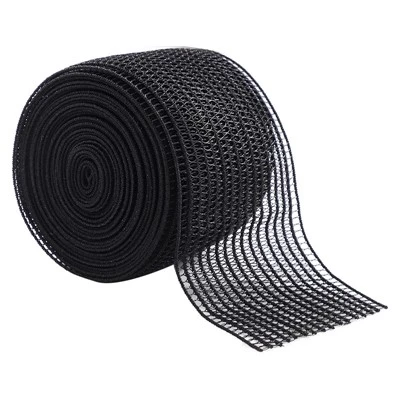
If you’re ready to learn more or discuss a custom order, don’t hesitate to reach out. We’re here to help you find the right elastic for your needs, so you can stop stressing about sagging bands or broken waist bands and focus on what you do best: making great products.
Braided Elastic Band References:
ASTM International. (2020). Standard Test Method for Tensile Properties of Elastic Textiles. ASTM D4964-20.
U.S. Consumer Product Safety Commission. (2022). Safety Standards for Children’s Clothing. 16 CFR Part 1501.
European Chemicals Agency. (2023). REACH Regulation: Restricted Substances List. Annex XVII.
Textile Institute. (2021). Durability of Elastic Components in Apparel: Industry Benchmarks and Testing Protocols. Journal of Textile and Apparel, Technology and Management.
Zhongshan Meiya Weaving Co., Ltd.
We are one of the most professional elastic waist band manufacturers and suppliers in China for nearly 30 years. With abundant experience, we warmly welcome you to wholesale bulk elastic waist band in stock here and get free sample from our factory. We also accept customized orders.
Address: No. 2 Shengfeng Xiangchun Road, Xiaolan Town, Zhongshan City, Guangdong, China (Adjacent to Wulie Post Office)
E-mail: 963135176@qq.com
WebSite: https://www.meiyaweaving.com/
